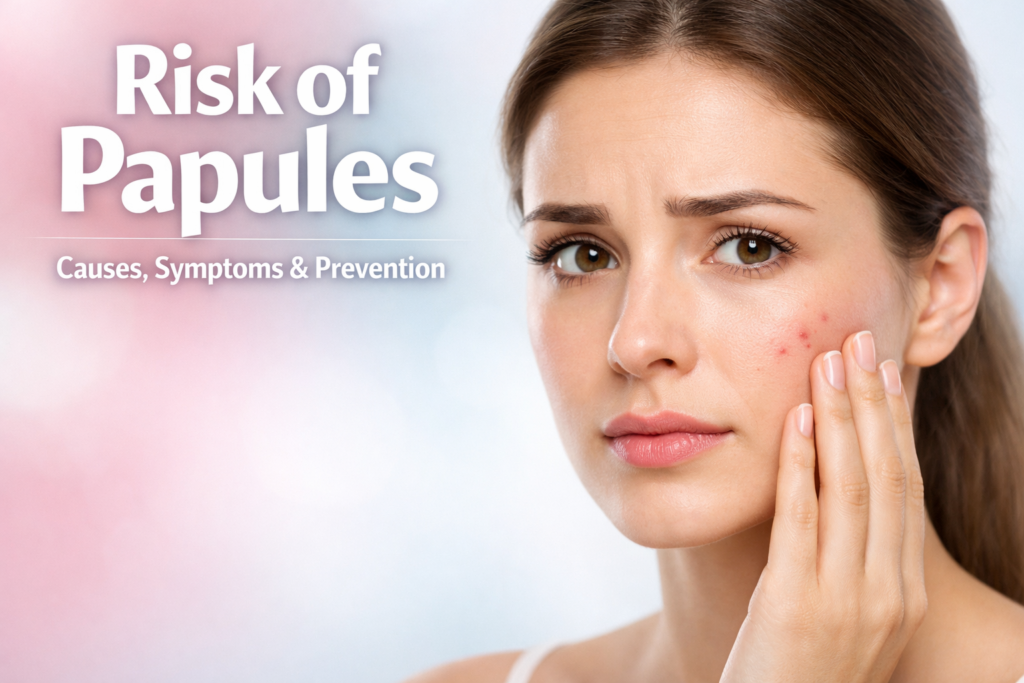

Skin changes can sometimes appear suddenly and leave people confused or worried. One of the most common minor skin concerns is the appearance of papules, which are small raised bumps on the skin. While they are usually harmless, many people wonder about the risk of papules, why they occur, and whether they indicate an underlying skin condition.
Papules can develop for several reasons, including acne, allergic reactions, infections, and inflammatory skin disorders. They may appear on the face, neck, chest, arms, or other parts of the body. Understanding the causes, symptoms, and potential risks can help you manage them properly and prevent complications.
This complete guide explores everything you need to know about the risk of papules, including medical explanations, treatment options, prevention methods, and when to seek professional care.
What Are Papules in Dermatology
Papules are small, solid, raised bumps that develop on the skin. In dermatology, they are usually less than one centimeter in diameter and can vary in color depending on the underlying cause. Some papules are red, while others may appear flesh-colored, brown, or purple.
Unlike pustules, papules do not contain pus or fluid. They form when skin cells, oils, or debris become trapped within pores or when inflammation occurs in the skin. Because they are firm and raised, papules are easy to feel when touching the skin.
Papules can occur as part of several skin conditions, including acne vulgaris, dermatitis, keratosis pilaris, and viral infections. They may appear individually or as clusters, depending on the underlying condition.
Understanding what papules are helps clarify why the risk of papules varies among individuals. Some people develop them frequently due to genetics, lifestyle habits, or environmental triggers.
Understanding the Risk of Papules
The risk of papules refers to the likelihood of developing these raised skin bumps due to internal or external factors. Although papules themselves are usually harmless, they can signal an underlying skin issue that requires attention.
Certain individuals have a higher risk of developing papules because of their skin type or hormonal activity. For example, people with oily or acne-prone skin are more likely to experience inflammatory papules caused by clogged pores.
Environmental factors can also increase the risk. Pollution, humidity, harsh skincare products, and excessive sun exposure may trigger inflammation that leads to papule formation.
Lifestyle habits play an important role as well. Poor skincare routines, excessive touching of the face, and inadequate hygiene can contribute to clogged pores and irritation.
Understanding these risks helps people adopt better skincare practices and reduce the likelihood of recurring skin bumps.
Common Causes of Papules on the Skin
Papules can arise from a wide range of causes, making it important to identify the underlying condition before starting treatment. The most common cause is acne, which develops when pores become blocked with oil and dead skin cells.
Inflammatory skin conditions are another major cause. Diseases such as eczema, psoriasis, and contact dermatitis can lead to small raised bumps that resemble papules. In these cases, inflammation in the skin triggers the formation of bumps.
Infections also contribute to papule development. Viral infections like molluscum contagiosum and bacterial skin infections may produce papules that spread across the skin.
Another possible cause is an allergic reaction to cosmetics, detergents, or medications. When the immune system reacts to a substance, the skin may respond by producing itchy papules.
Identifying the cause is essential because treatment approaches differ depending on whether the papules are related to acne, allergies, infections, or inflammatory conditions.
Symptoms and Appearance of Papules
Papules are typically small raised bumps that feel firm to the touch. They often appear red or pink when inflammation is present, although they can also match the natural color of the skin.
In many cases, papules occur alongside other skin symptoms such as redness, itching, or irritation. Some individuals may also notice mild swelling around the affected area.
Papules may appear in clusters or scattered across the skin. Acne-related papules frequently develop on the face, chest, shoulders, and back where oil glands are most active.
The bumps usually measure less than one centimeter and have a smooth or slightly rough surface. Because they do not contain pus, they look different from pimples or pustules.
Recognizing the typical appearance of papules helps people distinguish them from other skin lesions such as cysts, nodules, or blisters.
Types of Papules and Their Characteristics
Not all papules are the same. Dermatologists classify them based on their underlying cause and appearance.
Some papules result from inflammation within the hair follicles. These are commonly seen in acne or folliculitis and may appear red and tender.
Other papules develop due to keratin buildup within the skin. Keratosis pilaris, for example, produces small rough papules often found on the arms or thighs.
Viral papules are another category. These are usually caused by infections and may spread through direct contact with affected skin.
Comparison of Common Papule Types
| Type of Papule | Typical Cause | Common Location |
|---|---|---|
| Acne papules | Clogged pores and inflammation | Face, chest, back |
| Keratosis pilaris papules | Keratin buildup | Arms, thighs |
| Viral papules | Skin infections | Various areas |
| Allergic papules | Immune reaction | Anywhere on body |
Understanding these different types helps dermatologists determine the most appropriate treatment approach.
Medical Conditions Associated with Papules
Papules are often linked to specific medical conditions. Acne vulgaris is one of the most common conditions associated with papules, especially during adolescence and young adulthood.
Eczema and atopic dermatitis can also cause papular eruptions. These conditions produce inflamed, itchy skin bumps that may appear on the arms, legs, or face.
Certain viral infections cause papules that spread across the body. Molluscum contagiosum is a well-known example that produces dome-shaped papules with a central indentation.
Autoimmune disorders such as lichen planus may also produce papular lesions. In these cases, the immune system mistakenly attacks skin cells, leading to raised bumps.
Recognizing these associations helps healthcare professionals diagnose the underlying issue and recommend appropriate treatment.
Risk Factors That Increase Papule Formation
Several factors can increase the likelihood of developing papules. These factors often influence how the skin reacts to irritation or inflammation.
Genetics plays a significant role. People with a family history of acne or inflammatory skin conditions may be more prone to developing papules.
Hormonal changes are another major factor. Puberty, pregnancy, and hormonal imbalances can stimulate oil production in the skin, increasing the risk of clogged pores.
Environmental exposure can also contribute. Pollutants, humidity, and harsh weather conditions may irritate the skin and trigger inflammation.
Major Risk Factors for Papules
- Oily or acne-prone skin
- Hormonal fluctuations
- Poor skincare habits
- Allergic reactions to cosmetics
- Bacterial or viral infections
- Genetic predisposition
Understanding these risk factors allows individuals to take preventive measures and reduce the frequency of papular breakouts.
Are Papules Dangerous
In most cases, papules are not dangerous. They are usually mild skin lesions that resolve with proper care or treatment. However, their presence can sometimes indicate an underlying condition that needs medical attention.
For example, persistent papules may signal chronic inflammatory skin diseases such as eczema or psoriasis. Infections can also cause papules that require medical treatment.
Some papules may become irritated or infected if scratched repeatedly. This can lead to scarring or pigmentation changes.
Although the risk of papules causing serious health issues is low, monitoring any changes in size, color, or number is important. Sudden or widespread eruptions should be evaluated by a dermatologist.
Diagnosis of Papules by Dermatologists
Diagnosing papules usually begins with a physical examination of the skin. Dermatologists examine the size, color, location, and distribution of the bumps.
Medical history is also important. Doctors often ask about recent skincare products, allergies, medications, or infections that may have triggered the condition.
In some cases, additional tests may be needed to determine the exact cause.
Diagnostic Methods for Papules
| Diagnostic Method | Purpose |
|---|---|
| Skin examination | Identify visual characteristics |
| Medical history review | Detect triggers or underlying conditions |
| Skin biopsy | Confirm unusual or persistent lesions |
| Allergy testing | Identify allergic reactions |
These diagnostic methods help determine whether papules are caused by acne, allergies, infections, or inflammatory disorders.
Treatment Options for Papules
Treatment for papules depends on the underlying cause. Acne-related papules are often treated with topical medications such as benzoyl peroxide, salicylic acid, or retinoids.
For inflammatory skin conditions like eczema, dermatologists may prescribe corticosteroid creams or anti-inflammatory medications to reduce irritation.
Antibiotics may be necessary when bacterial infections cause papular eruptions. Viral infections, on the other hand, may require antiviral treatments or specialized dermatological procedures.
Gentle skincare practices are also important. Using non-comedogenic products and avoiding harsh scrubs can help prevent irritation that leads to papule formation.
A dermatologist can determine the most effective treatment plan based on the specific condition.
Natural Remedies and Home Care
Some mild papules can be managed with simple home care techniques. Gentle cleansing is one of the most important steps in maintaining healthy skin.
Using mild, fragrance-free cleansers helps remove dirt and excess oil without irritating the skin. Moisturizing regularly also supports the skin barrier and prevents dryness.
Natural remedies such as aloe vera and tea tree oil may provide mild anti-inflammatory and antibacterial benefits. However, these remedies should be used cautiously to avoid allergic reactions.
Maintaining good hygiene and avoiding touching or squeezing papules can prevent further irritation and reduce the risk of infection.
Preventing Papules Through Proper Skincare
Preventing papules begins with maintaining a consistent skincare routine. Cleansing the skin twice daily helps remove oil, sweat, and impurities that can clog pores.
Exfoliation can also help prevent buildup of dead skin cells, but it should be done gently to avoid irritation. Over-exfoliation can actually worsen inflammation and trigger papule formation.
Choosing skincare products designed for your skin type is essential. Non-comedogenic products are less likely to block pores and cause breakouts.
Sun protection is another important step. Ultraviolet exposure can irritate the skin and contribute to inflammatory skin conditions that cause papules.
Consistent skincare habits significantly reduce the overall risk of papules.
Lifestyle Habits That Affect Skin Health
Lifestyle choices have a major impact on skin health. Diet, stress levels, and sleep patterns all influence how the skin functions and heals.
A balanced diet rich in fruits, vegetables, and antioxidants supports healthy skin cells. Drinking enough water also helps maintain skin hydration and elasticity.
Stress can trigger hormonal changes that increase oil production and inflammation. This can lead to acne papules and other skin issues.
Regular exercise improves blood circulation, which delivers nutrients and oxygen to skin cells. This supports skin repair and reduces inflammation.
Adopting healthy lifestyle habits can significantly reduce the risk of recurring papules.
When to See a Doctor for Papules
Although papules are usually harmless, certain situations require medical attention. If the bumps persist for several weeks without improvement, it is advisable to consult a dermatologist.
Papules that spread rapidly or become painful may indicate an infection or allergic reaction. In these cases, professional treatment may be necessary.
Changes in color, shape, or size should also be evaluated by a medical professional. While rare, unusual skin lesions may require further examination.
Early diagnosis and treatment can prevent complications and help maintain healthy skin.
Long-Term Outlook and Skin Care Management
The long-term outlook for people who develop papules is generally very good. Most papules resolve without leaving permanent damage when treated properly.
However, chronic conditions such as acne or eczema may require ongoing management. Regular dermatological care and proper skincare routines can help control these conditions.
Consistency is key when managing papule-prone skin. Following recommended treatments and maintaining healthy habits can reduce flare-ups.
With the right approach, most individuals can maintain clear and healthy skin while minimizing the risk of papules.
Conclusion
Papules are common skin lesions that can appear for many reasons, including acne, allergies, infections, and inflammatory conditions. Although they are usually harmless, understanding the risk of papules is important for maintaining healthy skin.
Identifying the underlying cause allows for proper treatment and prevention. Factors such as genetics, hormonal changes, skincare habits, and environmental exposure all play a role in papule development.
By practicing good skincare, maintaining a healthy lifestyle, and seeking medical advice when necessary, individuals can effectively manage papules and reduce their recurrence.
FAQs
What causes papules to appear on the skin
Papules can appear due to clogged pores, inflammation, allergic reactions, infections, or chronic skin conditions such as acne or eczema.
Are papules the same as pimples
No. Papules are solid raised bumps that do not contain pus, while pimples or pustules contain visible pus.
Can papules go away on their own
Yes. Many papules resolve naturally, especially when caused by mild irritation or acne.
Is it safe to squeeze papules
No. Squeezing papules can increase inflammation, cause infection, and lead to scarring.
How can I prevent papules from forming
Maintaining proper skincare, using non-comedogenic products, avoiding harsh chemicals, and keeping the skin clean can help prevent papules.
Stay informed with the latest updates and detailed insights on Eduardo Hagn.