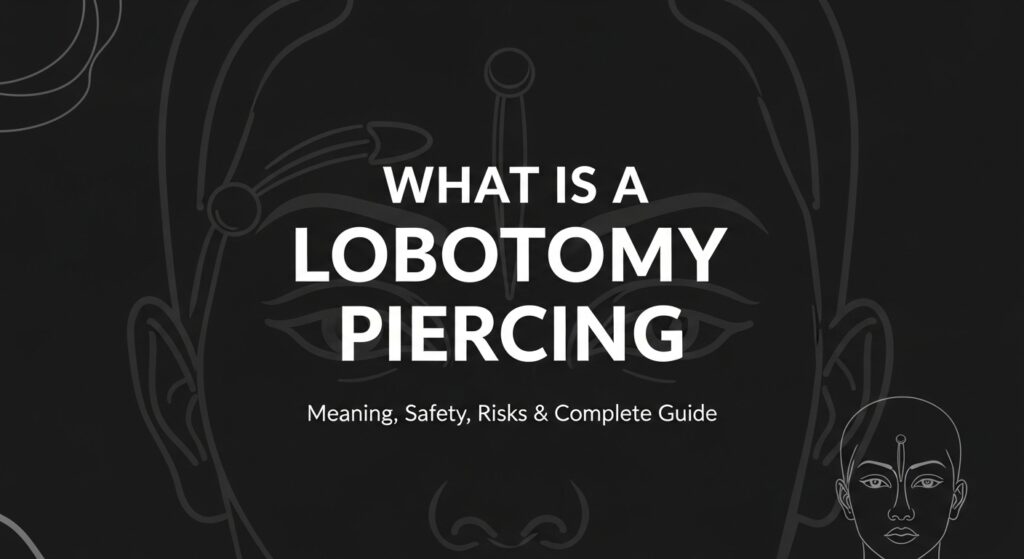

Body piercings have always pushed boundaries, but every so often a term pops up online that makes people stop and ask questions. One of those terms is “lobotomy piercing.” It sounds intense. It sounds medical. And it definitely sparks curiosity. So what is a lobotomy piercing, and is it actually what it sounds like?
The short answer is this: a lobotomy piercing is not a recognized professional piercing term in the body modification industry. It is usually slang used online to describe an extreme or unconventional facial piercing concept, often placed high on the forehead to mimic the historical transorbital lobotomy procedure. In most cases, it is either a fictional idea, a shock-value concept, or a mislabeling of an existing piercing style. In this complete guide, we will break down the meaning, origins, safety concerns, placement myths, pain levels, healing process, and everything you need to know before taking this term seriously.
What Is a Lobotomy Piercing?
When people ask what is a lobotomy piercing, they are usually referring to a supposed forehead piercing positioned above or between the eyes. The name comes from the historical medical procedure called a lobotomy, which involved accessing the brain through the eye socket or skull. Because of that association, the term immediately carries dramatic and unsettling imagery.
In professional piercing studios, there is no officially recognized piercing called a lobotomy piercing. You will not find it listed alongside common facial piercings like a bridge piercing, eyebrow piercing, or dermal anchor. Instead, the phrase tends to appear on social media platforms, forums, or meme culture where users describe a high-placed dermal or surface piercing in a joking or exaggerated way.
In most realistic scenarios, what someone calls a lobotomy piercing is either a vertical surface piercing on the upper forehead or a single dermal anchor placed between the brows. The name is more about shock value than anatomy. Understanding that difference is important before considering any form of extreme body modification.
The Origin of the Term Lobotomy Piercing
The term is rooted in the historical medical procedure known as a lobotomy, which was performed primarily in the mid-20th century to treat certain mental health conditions. The transorbital lobotomy, popularized by neurologist Walter Freeman, involved inserting an instrument through the eye socket into the brain. It is now widely regarded as a harmful and outdated practice.
Online communities sometimes use dark humor or dramatic medical references to name unusual piercings. Over time, a high-forehead or between-the-eyes piercing began being jokingly labeled as a “lobotomy piercing” because of its proximity to where the historical instrument would have entered.
It is important to separate historical fact from modern body art. No legitimate piercer performs anything that penetrates bone or approaches the brain. The term is purely aesthetic or slang based. Any piercing that would attempt to access deeper structures would be medically dangerous and illegal outside of a surgical setting.
Is a Lobotomy Piercing a Real Professional Piercing?
From a professional standpoint, no. There is no certified or standardized piercing called a lobotomy piercing in the body modification field. Organizations that set safety standards for piercers do not recognize it as an official category.
What often happens is mislabeling. A client might walk into a studio asking for a lobotomy piercing after seeing something online. A trained piercer will clarify what they actually want. In many cases, the request translates into either a surface piercing across the upper forehead or a dermal anchor placed vertically.
Reputable studios prioritize anatomy, safety, and long-term healing. They do not create piercings that interfere with bone, sinuses, or neurological structures. So while the phrase may exist online, in real studios it gets translated into safe, surface-level options or declined entirely if unsafe.
Common Piercings Confused With a Lobotomy Piercing
Several legitimate facial piercings are often confused with this term. The most common one is the bridge piercing, which sits horizontally between the eyes on the bridge of the nose. Another is the third eye dermal, placed vertically in the center of the forehead.
A bridge piercing goes through loose skin at the top of the nose and does not touch bone or cartilage. A dermal anchor, also called a microdermal piercing, is a single-point piercing that sits flat against the skin. Both are surface-level modifications and are performed using sterile equipment.
People sometimes use dramatic names online, but in a studio setting, these piercings have clear, standardized names. If you are considering one, use the correct terminology to avoid confusion and to ensure your piercer understands your expectations.
Placement and Anatomy Considerations
Any piercing placed on the forehead or upper face requires careful anatomical assessment. The skin thickness, muscle movement, and blood vessel placement all matter. Not everyone is a good candidate for surface or dermal piercings in this area.
Surface piercings on the forehead have a higher risk of rejection because the skin is relatively tight and moves frequently with facial expressions. Microdermal anchors may be more stable, but even they carry risks. Swelling, irritation, and migration can occur if jewelry is not properly fitted.
A trained piercer will evaluate your skin, discuss healing expectations, and possibly suggest alternative placements if your anatomy is not suitable. Safety always comes first, especially in visible facial areas.
How Painful Is a Lobotomy-Style Piercing?
Pain levels depend entirely on the actual piercing being performed. Since there is no true lobotomy piercing, pain will match whichever legitimate procedure you choose, such as a dermal anchor or bridge piercing.
Most clients describe dermal anchor insertion as a quick, sharp pressure rather than prolonged pain. Surface piercings may feel similar to a strong pinch followed by mild throbbing. Pain tolerance varies widely, but facial piercings are generally rated as moderate on most pain scales.
The good news is that the procedure itself is very fast when done by a professional. The discomfort typically lasts only seconds. Proper aftercare plays a bigger role in long-term comfort than the brief initial pain.
Healing Time and Aftercare
Healing times depend on the exact type of piercing. A bridge piercing usually takes around 8 to 12 weeks to heal. Dermal anchors can take 1 to 3 months for initial healing, though full stabilization may take longer.
Aftercare is straightforward but essential. Saline solution rinses twice daily, avoiding harsh cleansers, and not touching the jewelry unnecessarily are key steps. Makeup should be kept away from the area during early healing.
Because the forehead is exposed to sun, sweat, and facial products, keeping the area clean is crucial. Ignoring aftercare can lead to irritation, infection, or rejection.
Risks and Potential Complications
All piercings carry risks, but facial piercings demand extra caution. Common issues include swelling, redness, irritation bumps, and migration. Surface piercings are especially prone to rejection because the body may push the jewelry outward over time.
Infections can occur if aftercare is neglected or if the piercing is performed in unsanitary conditions. Signs include persistent swelling, unusual discharge, or increasing pain. Early professional evaluation is important if symptoms appear.
Choosing an experienced, licensed piercer dramatically reduces these risks. Avoid anyone offering extreme or experimental procedures that claim to mimic medical techniques.
Jewelry Types Used in Forehead Piercings
The jewelry depends on the specific piercing. Bridge piercings typically use straight barbells made of implant-grade titanium or surgical steel. Dermal anchors use a base inserted under the skin with interchangeable tops.
Here is a quick comparison table:
| Piercing Type | Common Jewelry | Typical Healing Time |
|---|---|---|
| Bridge Piercing | Straight barbell | 8 to 12 weeks |
| Dermal Anchor | Microdermal top | 1 to 3 months |
| Surface Forehead | Surface barbell | 2 to 4 months |
Implant-grade titanium is often recommended because it reduces allergic reactions and irritation. High-quality materials support smoother healing.
Who Should Avoid This Type of Piercing
People with certain skin conditions, healing disorders, or a history of keloids should consult a medical professional before getting any facial piercing. The forehead is highly visible, and scarring can be noticeable.
Individuals in careers with strict appearance policies should also consider workplace rules. Unlike ear piercings, facial piercings are harder to conceal.
If you are unsure about your anatomy or long-term commitment, starting with less visible piercings may be a better choice.
Cultural and Social Perception
Facial piercings have become more mainstream over the past decade. However, extreme or unusual placements still attract attention. A high-forehead dermal may be seen as bold or unconventional depending on your social circle.
Online trends often amplify shock-value names like lobotomy piercing. In reality, most people with forehead piercings simply refer to them by their proper names. Social acceptance varies by region, profession, and age group.
Understanding these perceptions helps you make a decision you will feel comfortable with long term.
Cost of a Forehead or Dermal Piercing
Pricing varies by location and studio reputation. On average, a dermal anchor may cost between 40 and 100 dollars, including basic jewelry. Bridge piercings fall in a similar range.
Here is a simple cost overview:
| Factor | Estimated Range |
|---|---|
| Piercing Fee | 30 to 70 USD |
| Implant Grade Jewelry | 20 to 60 USD |
| Aftercare Solution | 5 to 15 USD |
Cheaper is not always better. Paying for experience, sterile equipment, and high-quality jewelry protects your health.
Removal and Scarring
Dermal anchors can be removed by a professional if needed. Surface piercings can also be taken out, though small scars may remain. The forehead skin is thin, so scar visibility varies.
If rejection occurs, early removal reduces scarring. Attempting to remove jewelry yourself can cause unnecessary damage.
Always consult a professional piercer for safe removal procedures.
How to Choose a Safe Piercing Studio
Look for studios that follow strict hygiene standards, use sterile single-use needles, and provide clear aftercare instructions. Read reviews and check portfolios of healed work.
Ask about jewelry materials and licensing. A professional will welcome your questions and explain the procedure calmly.
Avoid anyone who markets extreme procedures without medical credentials.
Final Thoughts on What Is a Lobotomy Piercing
The phrase may sound dramatic, but in reality, a lobotomy piercing is not an official or medically connected body modification. It is typically slang for a high-placed dermal or surface piercing on the forehead. No professional piercer performs anything involving bone or brain access.
If you are drawn to the aesthetic, focus on legitimate options like a bridge piercing or third eye dermal performed by an experienced professional. Safety, hygiene, and informed decisions matter far more than edgy names.
FAQs
Is a lobotomy piercing dangerous?
The term itself is misleading. Legitimate forehead piercings are surface-level and safe when done professionally, but they still carry standard piercing risks.
Does it involve the skull or brain?
No. Any safe piercing only goes through skin tissue. Anything deeper would require surgery and is not a piercing.
How long does it last?
Dermal anchors can last several years if properly cared for, though some eventually reject.
Can it leave a scar?
Yes, small scars are possible, especially if rejection occurs.
Is it the same as a bridge piercing?
Not exactly. A bridge piercing sits between the eyes, while slang usage of lobotomy piercing often refers to a higher forehead placement.
Stay informed with the latest updates and detailed insights on Eduardo Hagn.